
-
 This piece features ten schooling mackerels swimming calmly with fins raised as if catching an ocean current. In their largest numbers, mackerels have been found to travel in schools that stretch as far as 20 miles. Painted by hand the artist uses aqua tones reminiscent of its ocean habitat. Capiz oyster shell adorn the front adding a watery shimmer. The basic frame of this piece is created using tin, which is powder coated with a black finish. The frame is reinforced using tin wire along the inner edge. The front of the body is adorned with capiz. Capiz is an oyster shell and the primary purpose of the oyster is as a source of food. However, the by-product, the shell, can be used for decoration. Due to it being a natural material, the natural colors of the capiz may come through as tans and browns underneath the hand-painted surface.
 -
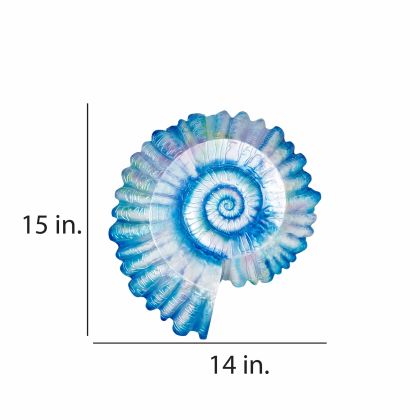
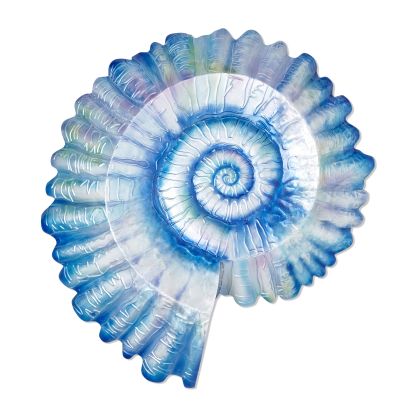 The spiral, flat seashell shape is a familiar one, but few know what actually live inside. This shell belongs to a creature known as a nautilus. Related to octopus, this creature is mobile, able to jettison itself through the ocean with streams of water. The artist captures its classic shape and adds deep shades of sea blue. Capiz oyster shell adorns its exterior as if it were glistening under water. The basic frame of this piece is created using tin, which is powder coated with a black finish. The frame is reinforced using tin wire along the inner edge. The front of the body is adorned with capiz. Capiz is an oyster shell and the primary purpose of the oyster is as a source of food. However, the by-product, the shell, can be used for decoration. Due to it being a natural material, the natural colors of the capiz may come through as tans and browns underneath the hand-painted surface.
 -
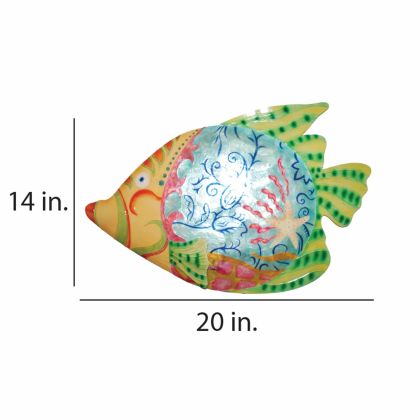
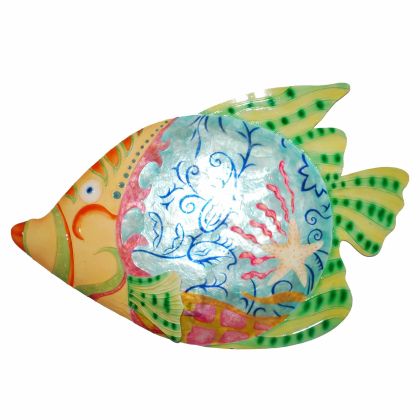 This piece-of-art is influenced not only by nature, but also different cultures of the world. The frame is of a butterflyfish, which are commonly found in reefs of the Atlantic, Indian, and Pacific Oceans. The colors and swirls painted onto the fish are commonly seen in those reefs among the different plants and animals that reside there. The style in which the fish is painted represents an artistic style commonly seen in the Caribbean. The artist also creates slight contrasts between the body of the fish using capiz oyster shells and the matted outer fins and face. The body will reflect light making it seem bolder. All the components come together creating a fun and global piece. The basic frame of this piece is created using tin, which is powder coated with a black finish. The frame is reinforced using tin wire along the inner edge. The front of the body is adorned with capiz. Capiz is an oyster shell and the primary purpose of the oyster is as a source of food. However, the by-product, the shell, can be used for decoration. Due to it being a natural material, the natural colors of the capiz may come through as tans and browns underneath the hand-painted surface.
 -
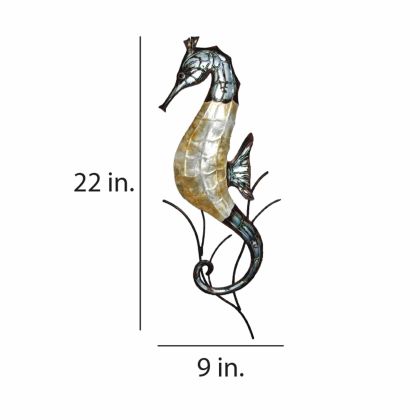
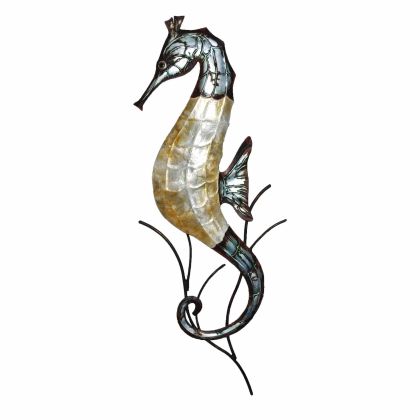 The seahorse has captured the minds and imaginations of people across all cultures for thousands of years. Seen as a symbol of good luck, strength and safety, this unique and beautiful animal is as charming as it is mysterious. The artist captures the beauty of the seahorse with a raised fine, high shine, hand-painted finish, and elegant mother of pearl chest and forefront. The basic frame of the Seahorse Wall Decoris created using tin, which is powder coated as a black finish. Capiz is an oyster shell and the primary purpose of the oyster is as a source of food. However, the by-product, the shell, can be used for decoration. Due to it being a natural material, the natural colors of the capiz can come through as tans and browns.
Helpful Links


Helpful Links
Payments & Returns
We accept VISA, Master Card, Discover, American Express, and PayPal